
Know what version, source scope, open risk, and report evidence the team is operating from.
Code Hunter Team · Evidence-led ASPM
Close the loop from product baseline to release decision.
Team embeds AI review into the engineering workflow: baseline a business service, ingest scanner evidence, analyze requirement and code-change impact, govern dependency risk, and turn every decision into tasks, CI evidence, accepted risk, or release gates.
Product baselineExternal evidenceRequirement impactSCA policy gate
Team operating system
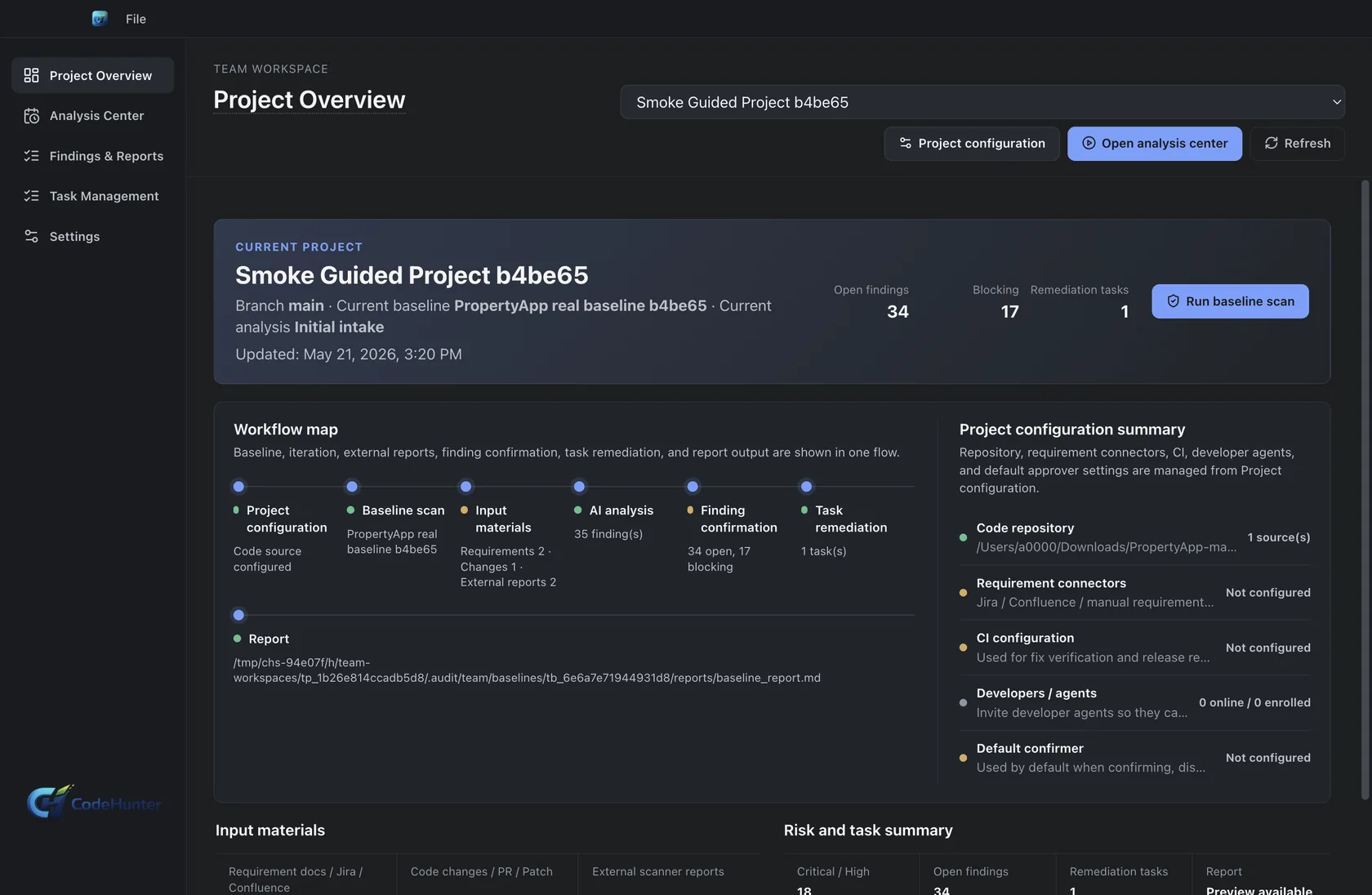
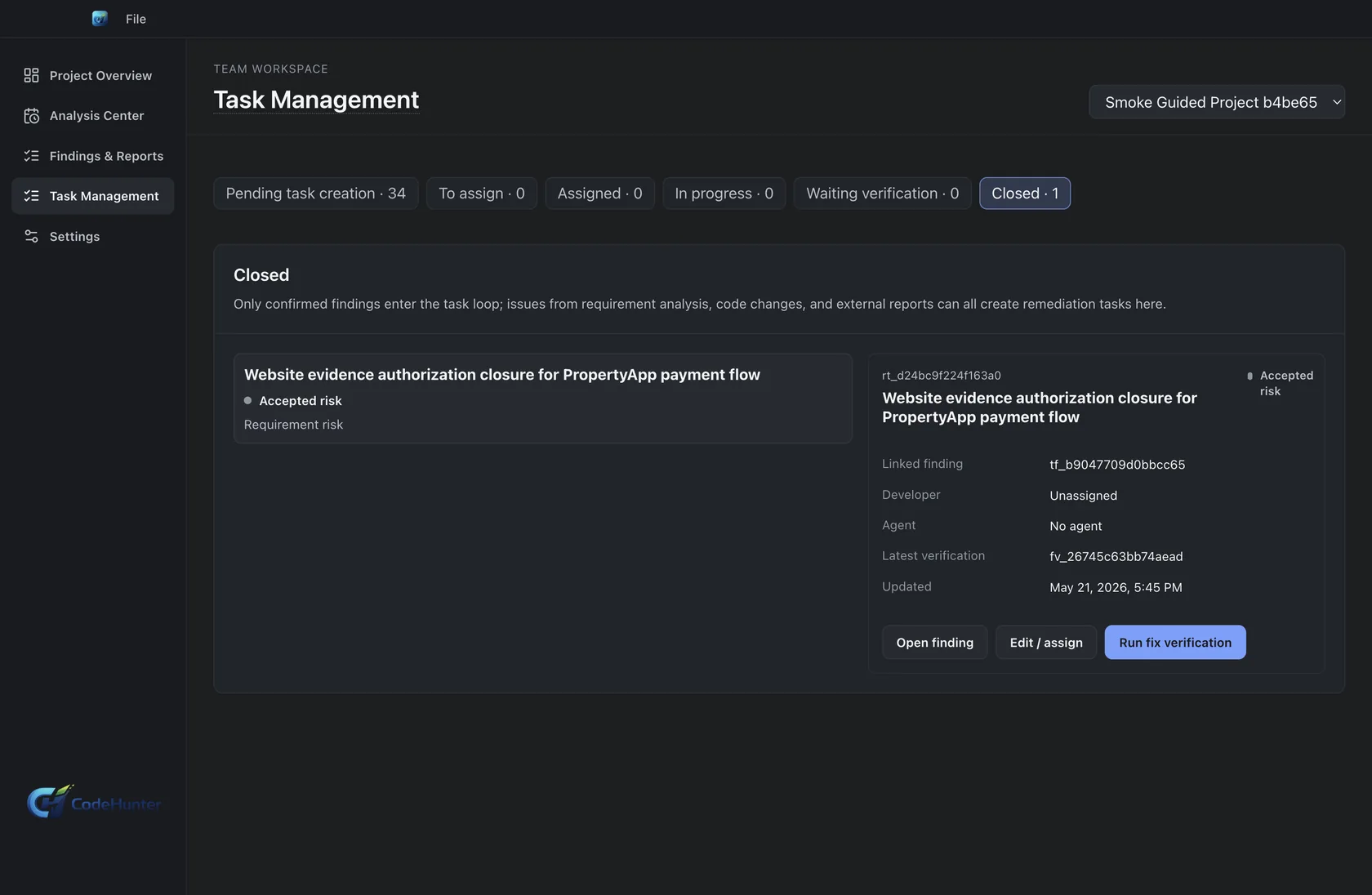
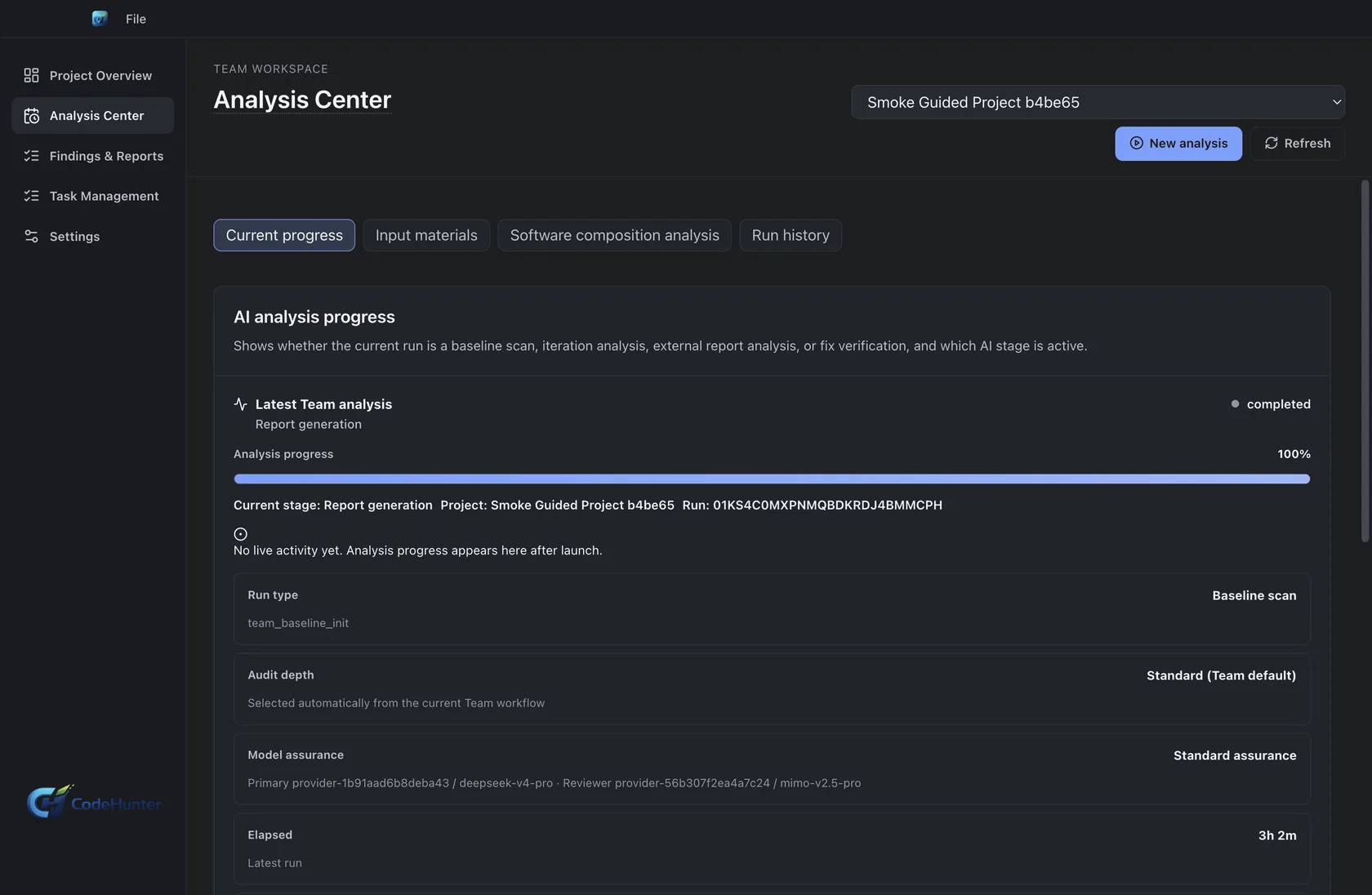
Team workspace
A complete ASPM workspace for one product team or business line.
Team is where security, AppSec, R&D leads, project owners, and remediation owners work from the same product baseline. It is not a narrower edition of Enterprise; Enterprise Portal adds a control plane for creating and governing multiple Team workspaces.
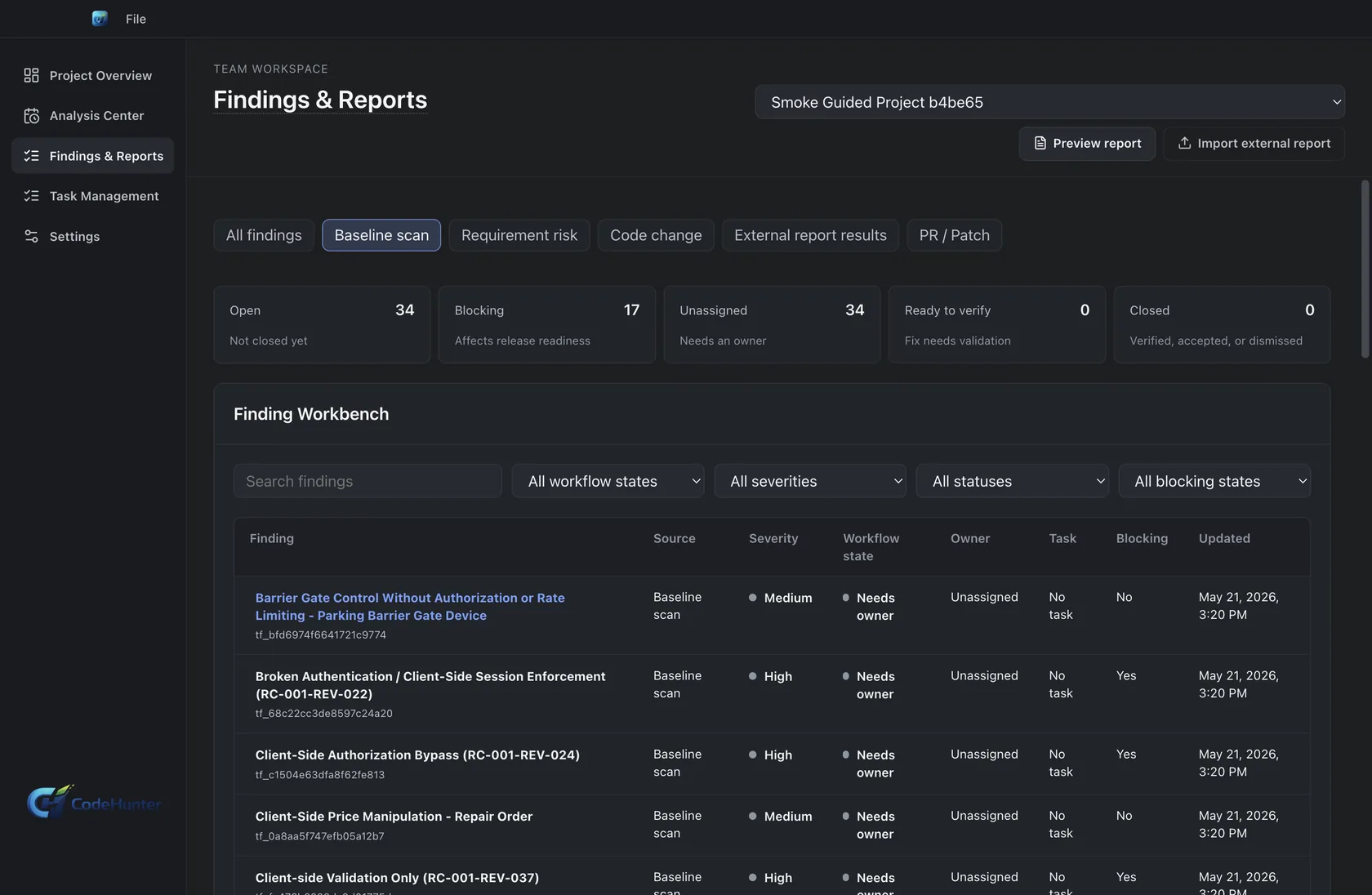
Product baseline
Establish the product security baseline before the iteration starts.
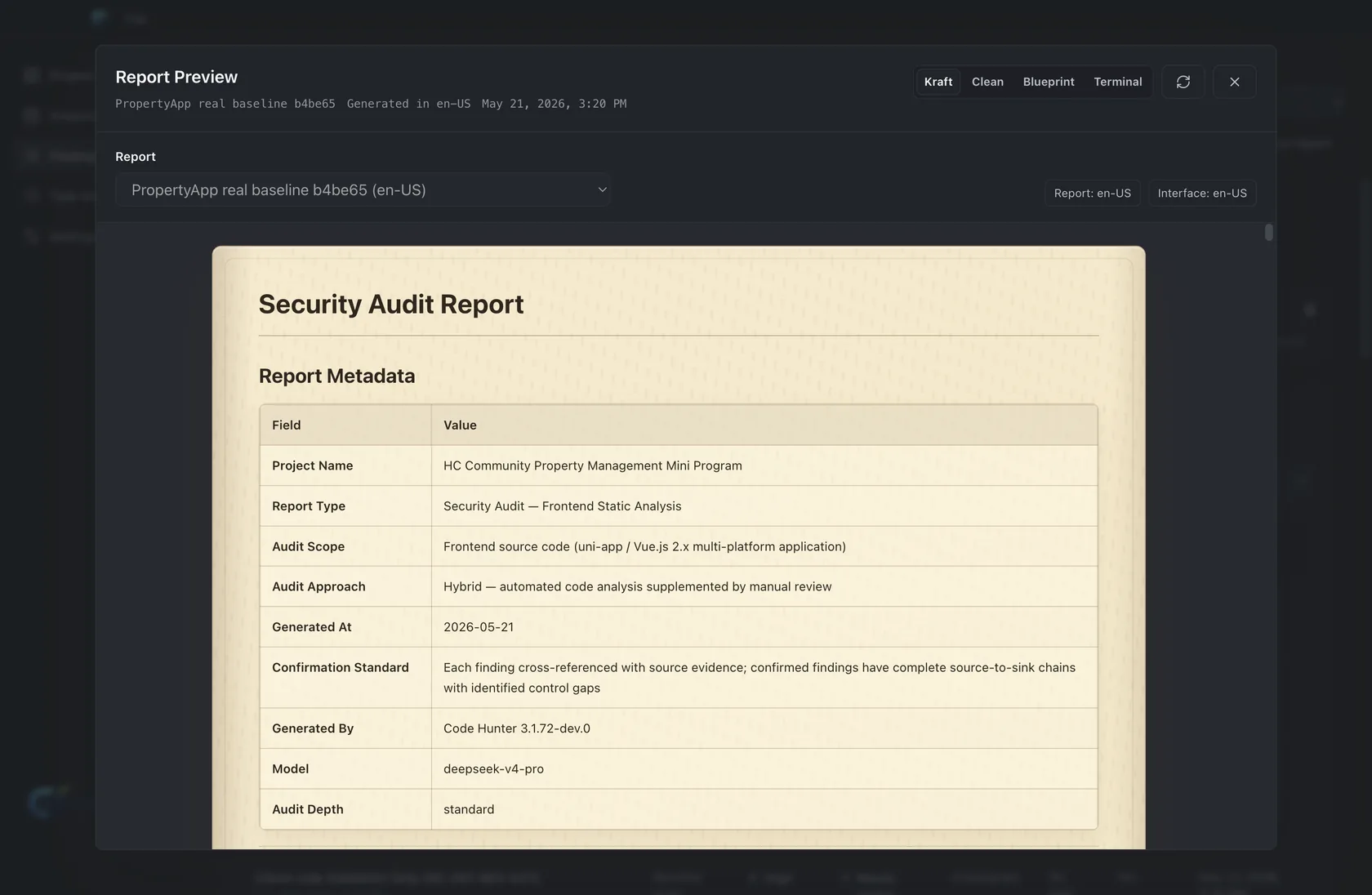
Team keeps source scope, ownership, open findings, run history, and report evidence attached to a versioned product boundary, so every later change is measured against a defensible baseline.
- Versioned project, service, or business-line workspace
- AI-reviewed baseline findings and report snapshots
- Run history for release comparison and audit review
- Fresh baseline promotion after verified closure
Baseline turns the product into a measurable security surface.
Baseline closed loop
External evidence fusion
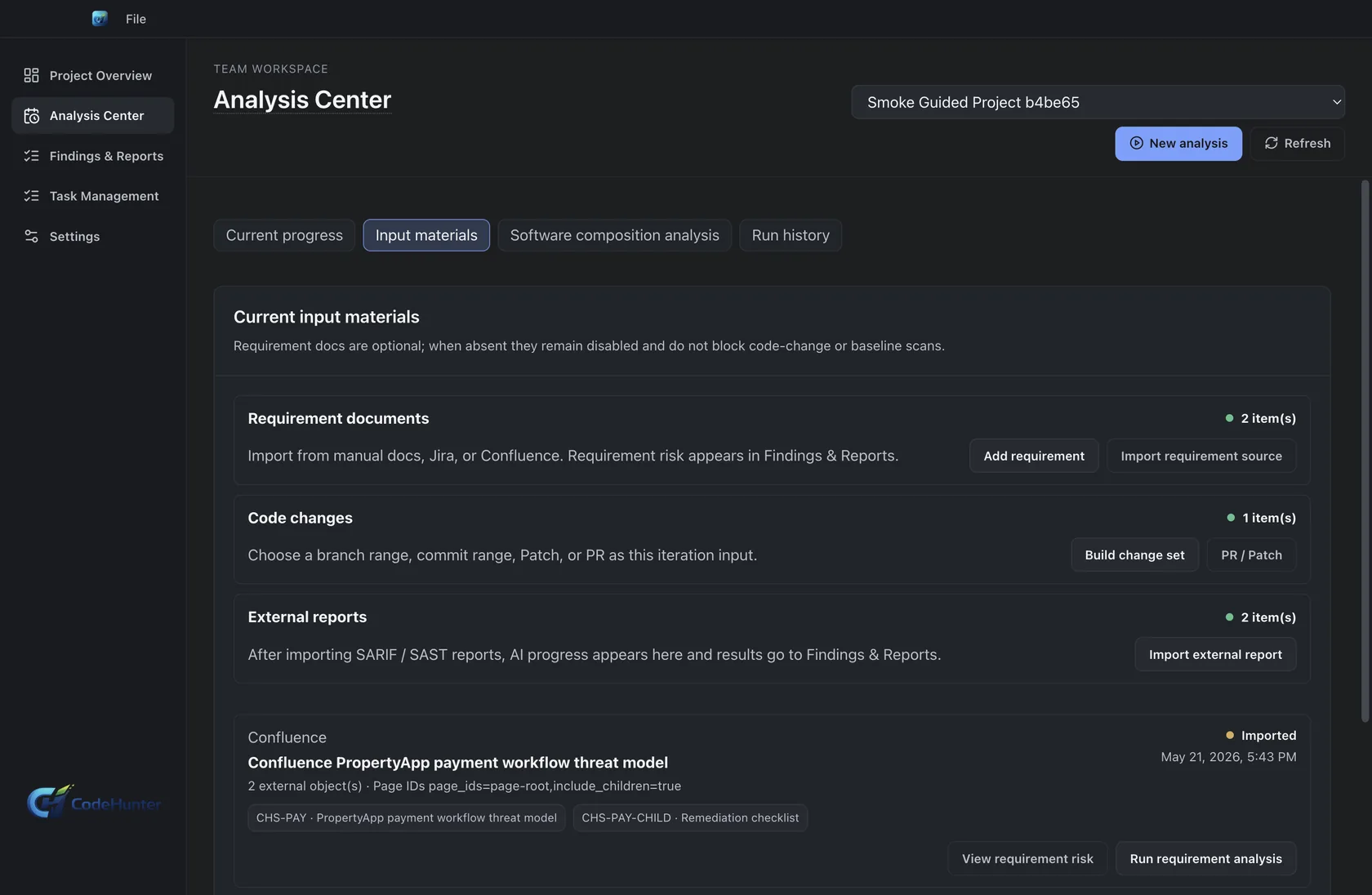
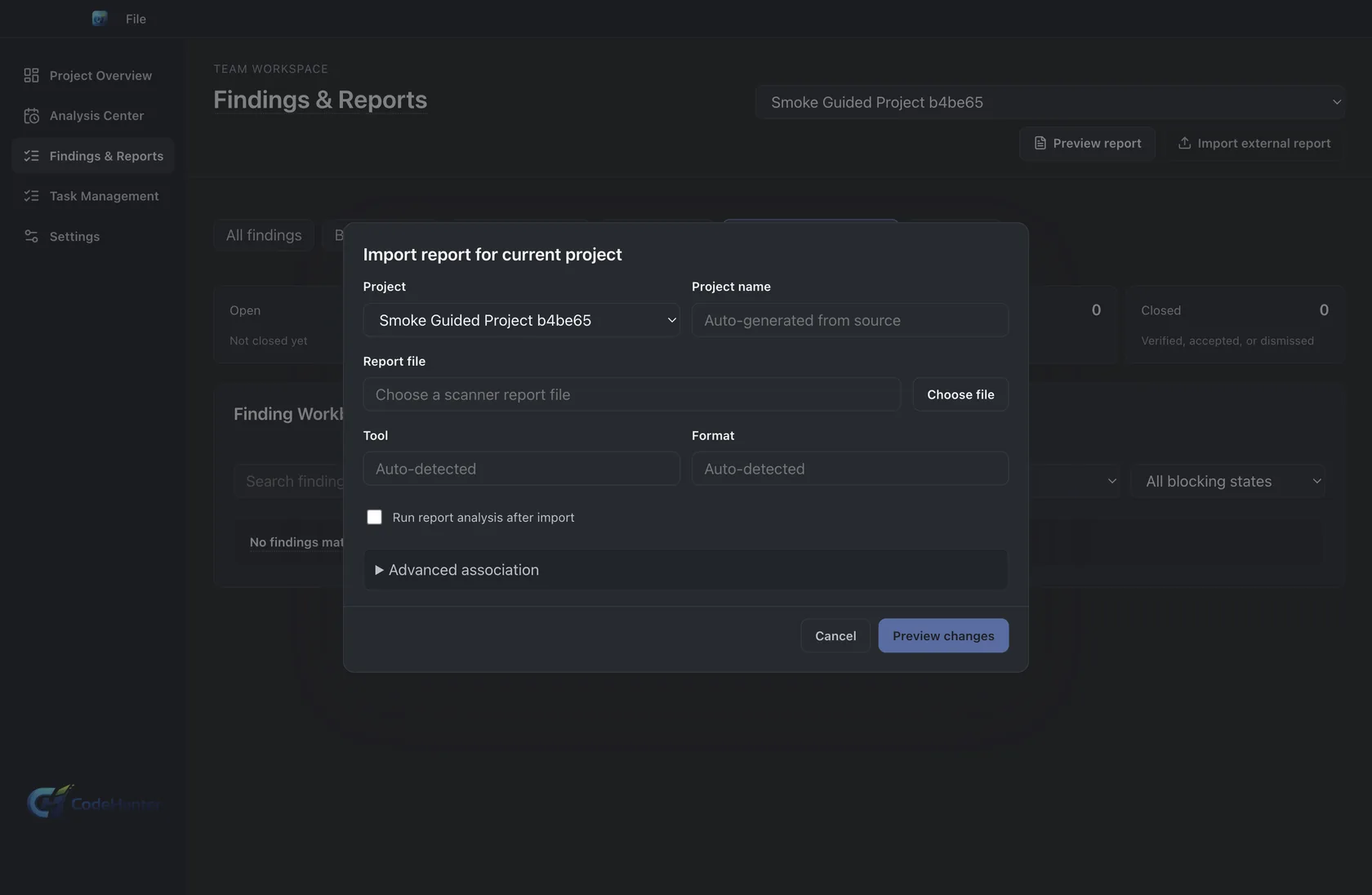
Bring external SAST and SARIF into the same governance lane.
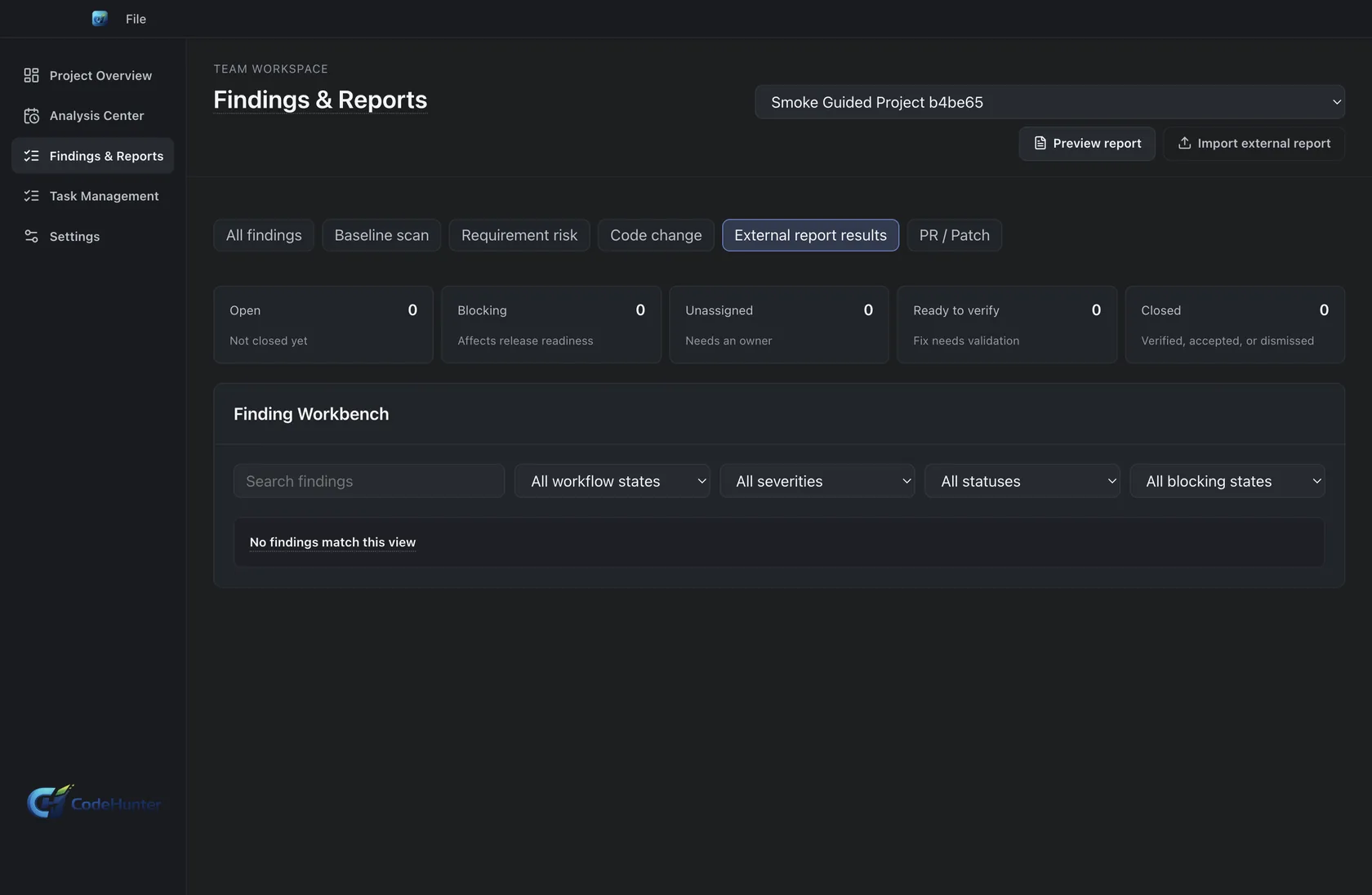
Scanner output becomes governed evidence instead of a detached spreadsheet. Team normalizes imported findings, preserves source traceability, and routes reviewed risk into the same owner and remediation flow.
- SAST, SARIF, and external report intake
- Normalized findings with source traceability
- AI-assisted review before owner handoff
- Repeatable import without breaking baseline continuity
External tools become inputs to the ASPM system, not parallel processes.
External report closed loop
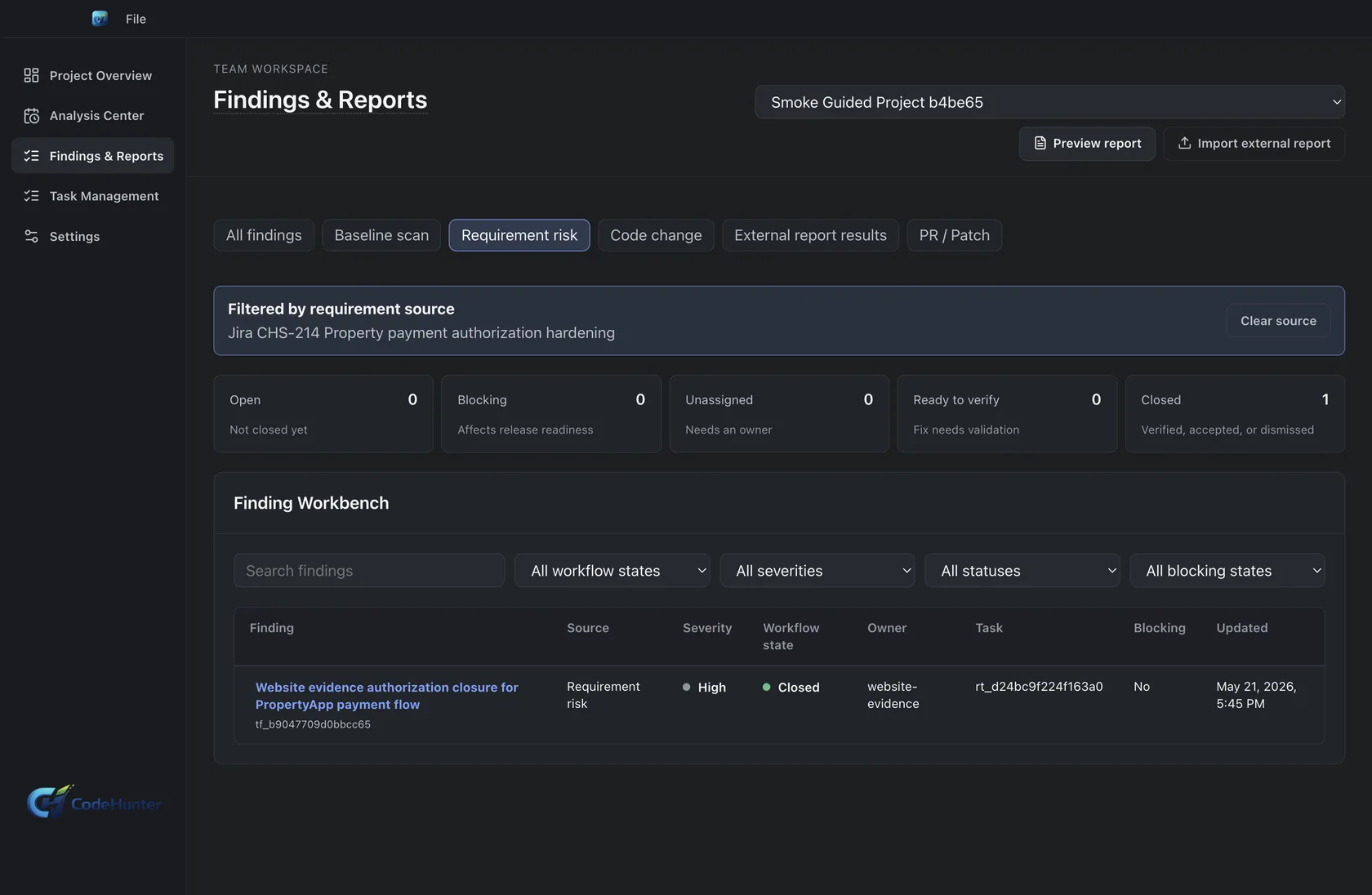
Requirement and code-change impact
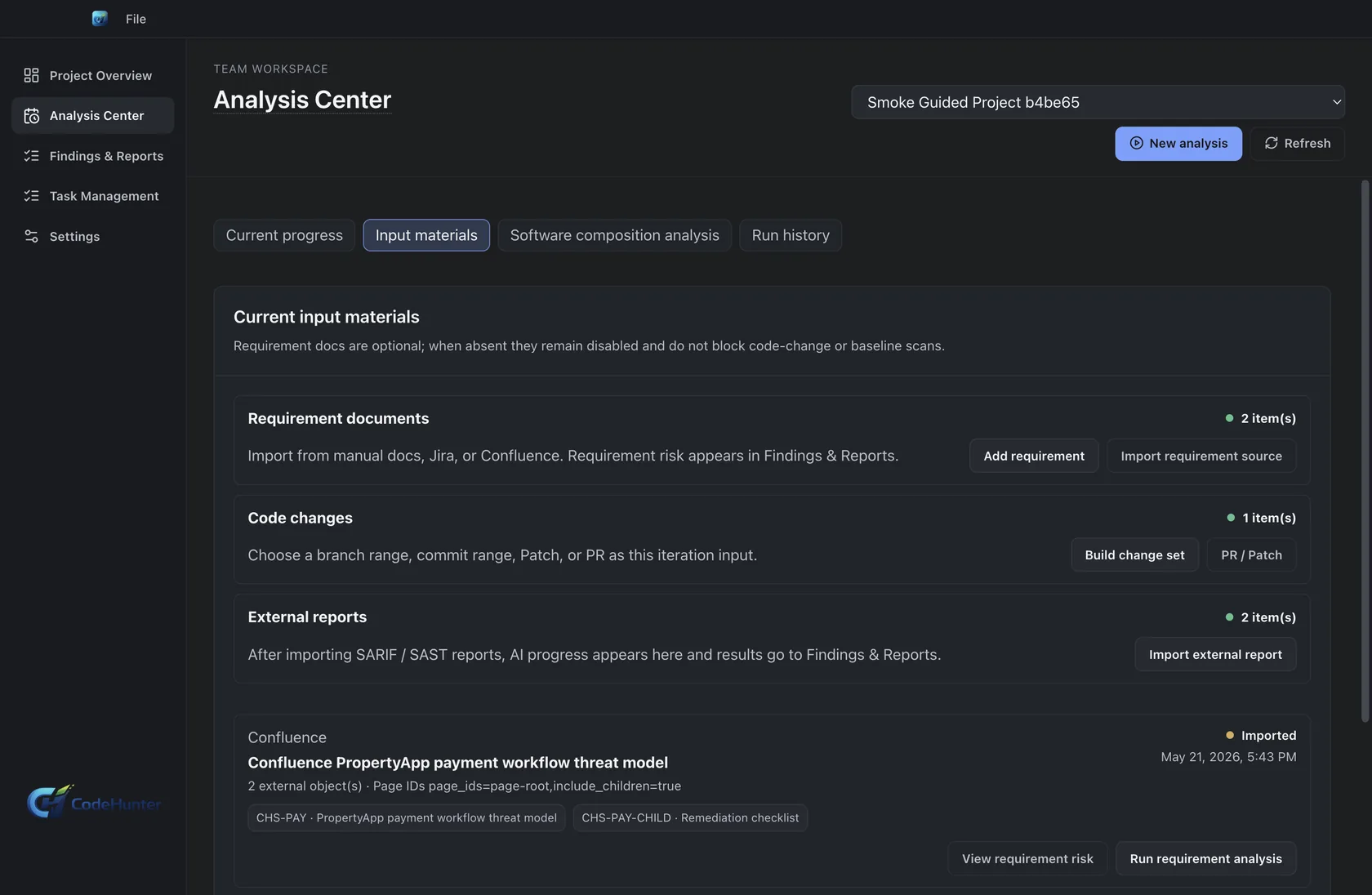
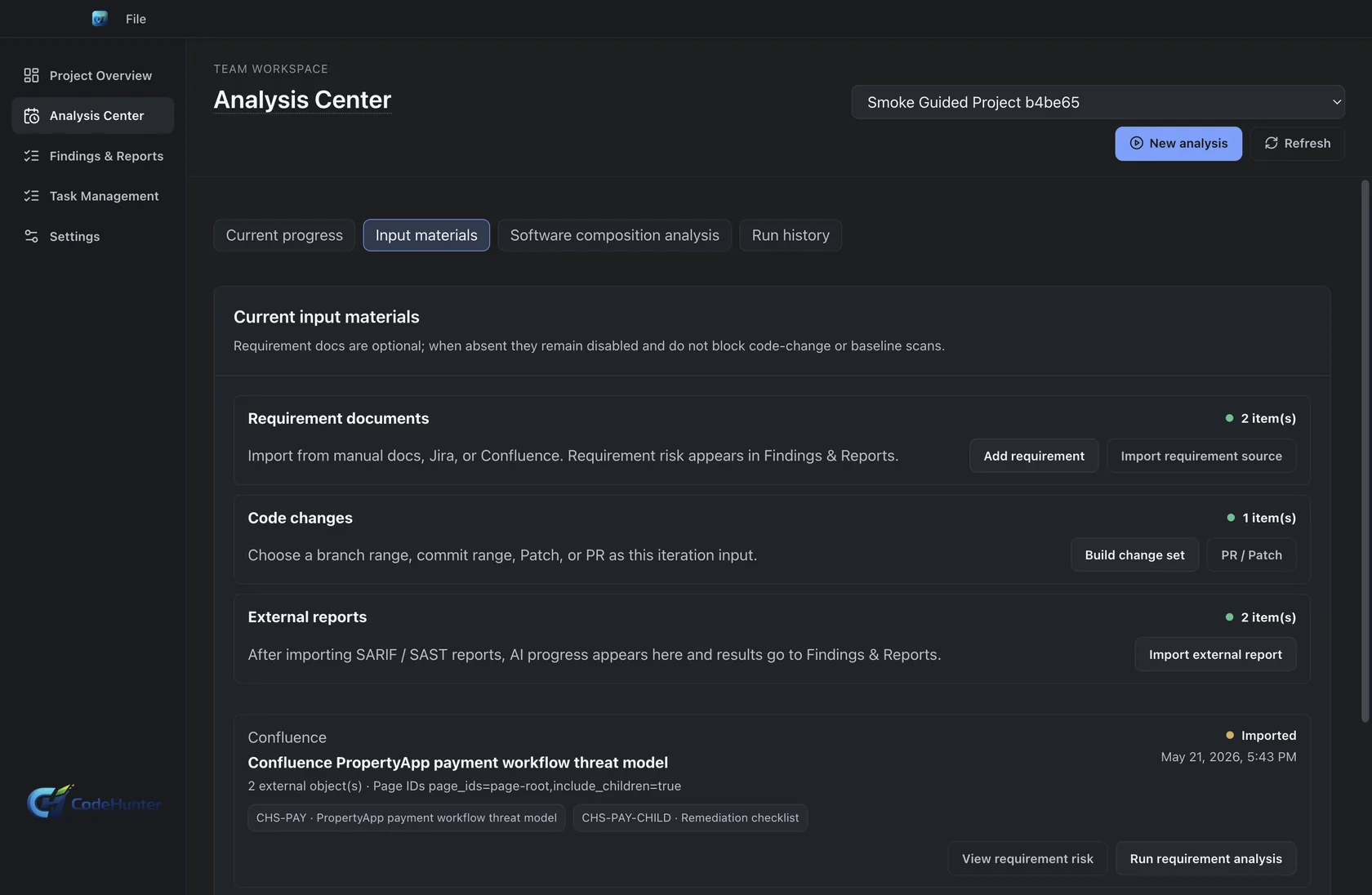
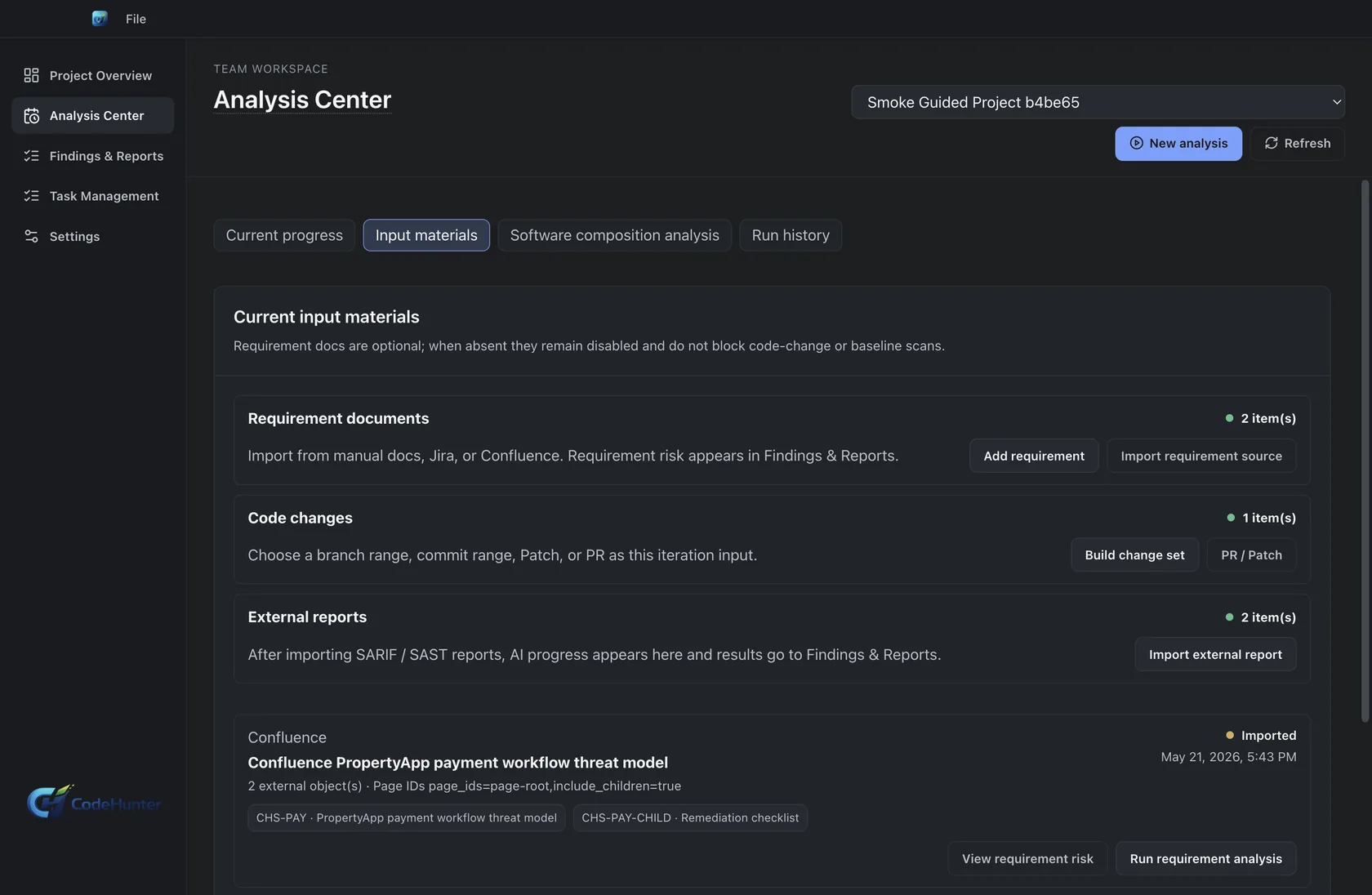
Turn requirements and code changes into security work.
Iteration analysis connects requirement sources, change sets, control expectations, and AI review. The result is not a comment thread; it is owner-ready security work with acceptance criteria and verification evidence.
- Requirement-to-control analysis from Jira, Confluence, MCP, or structured inputs
- Delta code review grounded in patch and change-set evidence
- Security tasks with owner, state, and acceptance criteria
- Verification evidence carried back into the release record
Change impact becomes governed work before it becomes release risk.
Iteration closed loop
SCA policy and release gate
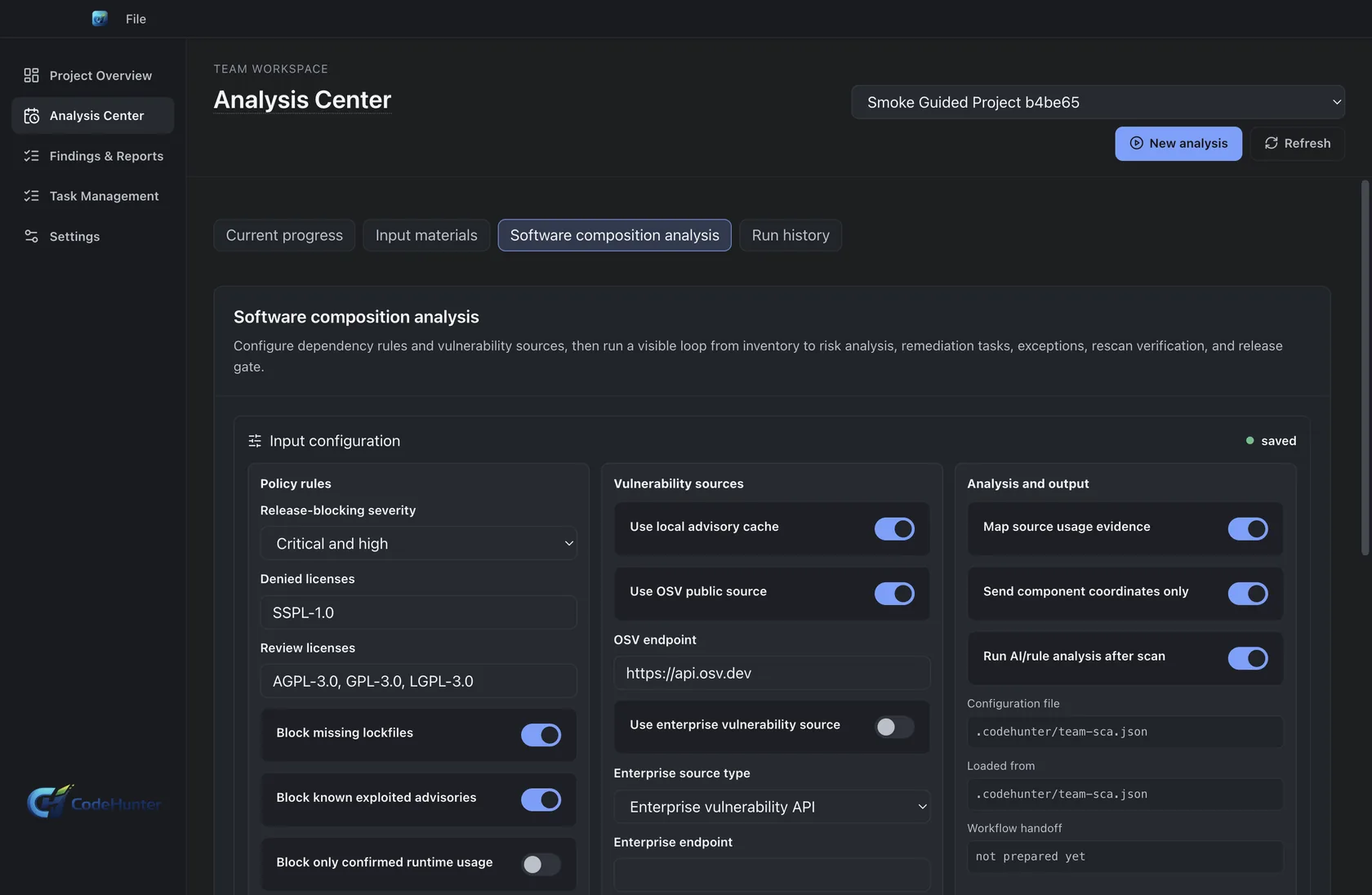
Govern dependency risk before the release gate.
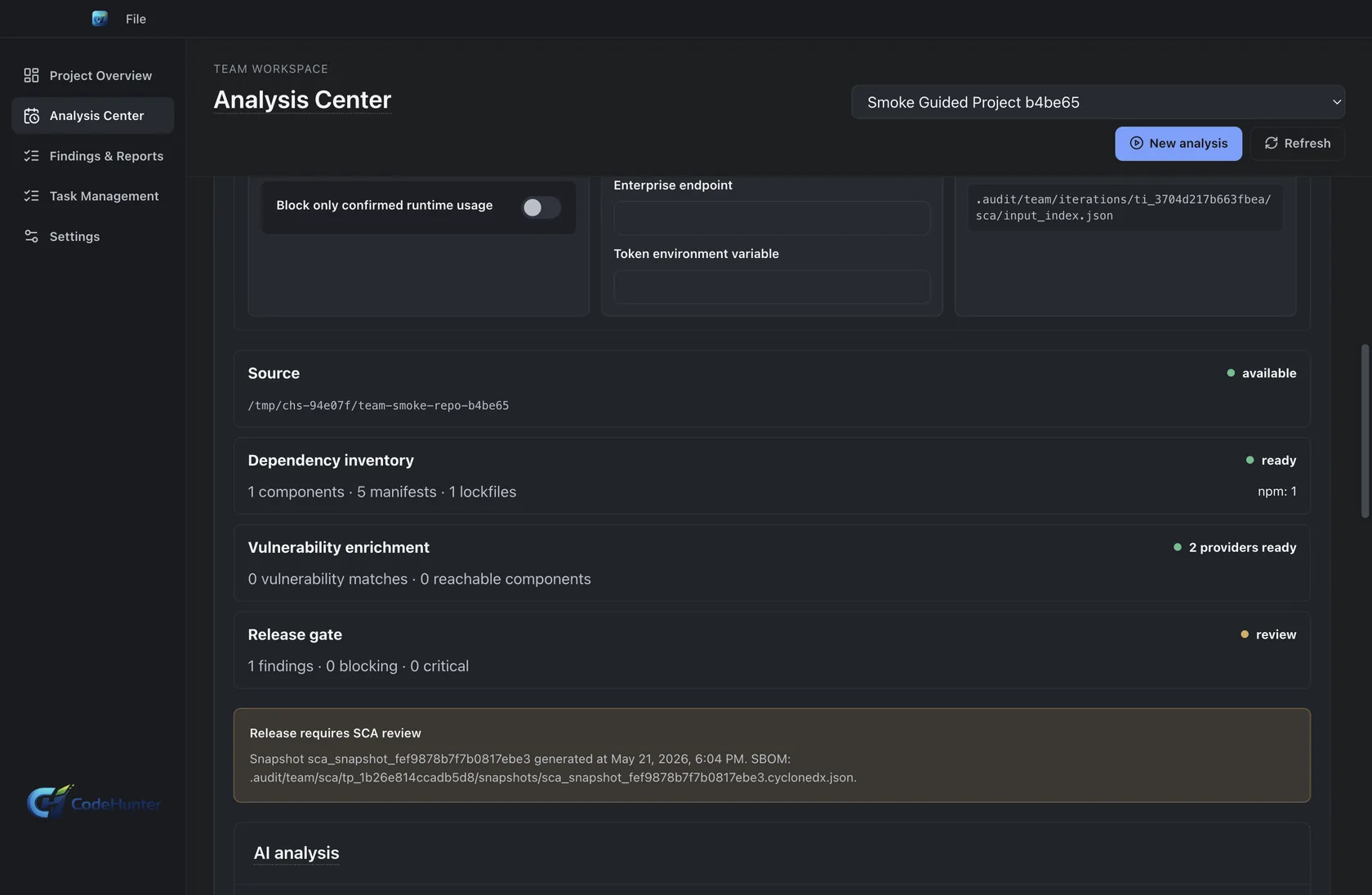
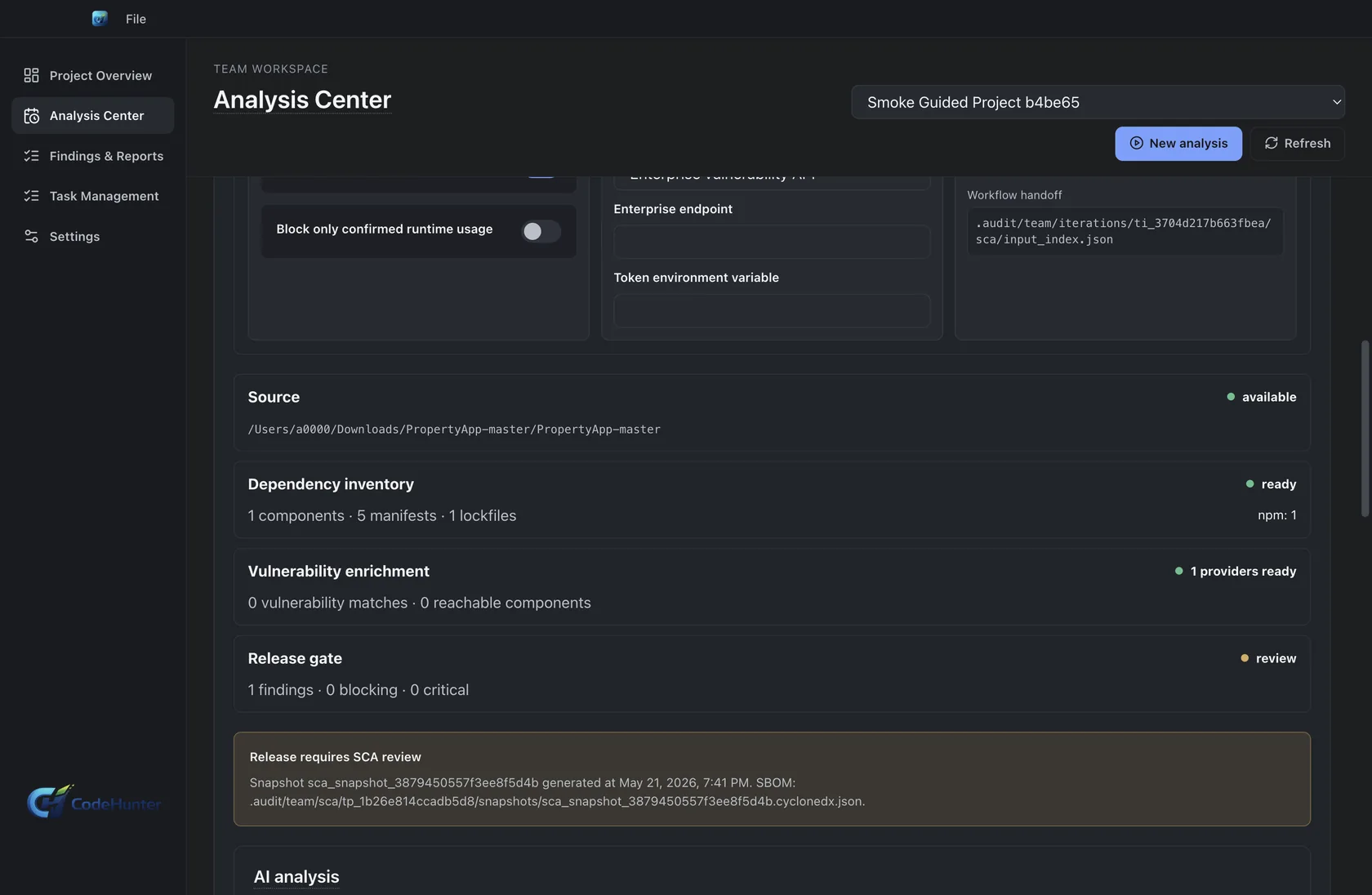
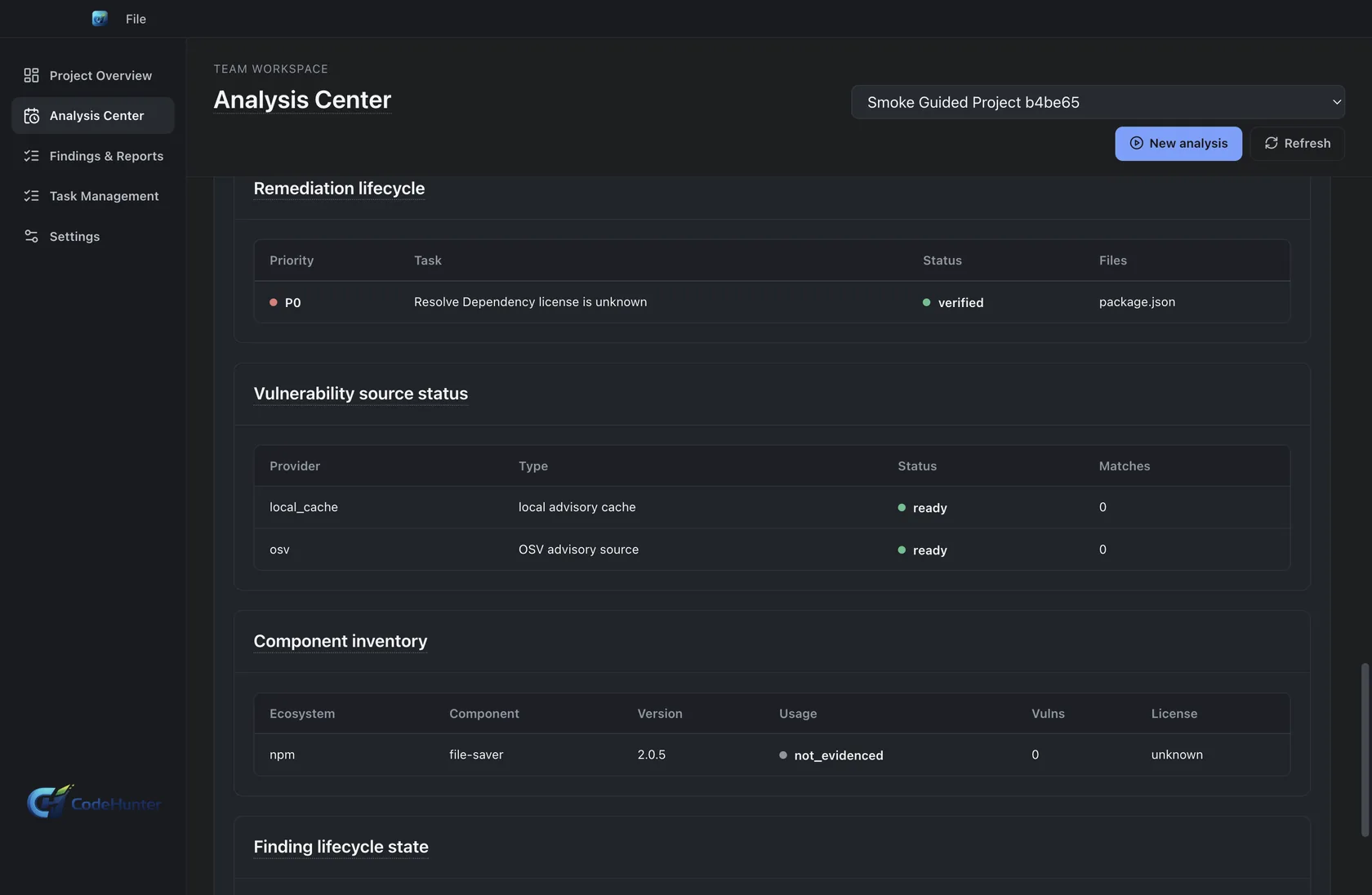
Team brings dependency intelligence into the release workflow: OSV/CVE data, enterprise vulnerability APIs, custom MCP services, policy thresholds, VEX exceptions, CI status, and verification evidence all contribute to release readiness.
- OSV/CVE intelligence plus enterprise API and custom MCP source support
- Dependency snapshot scanning tied to product version and release context
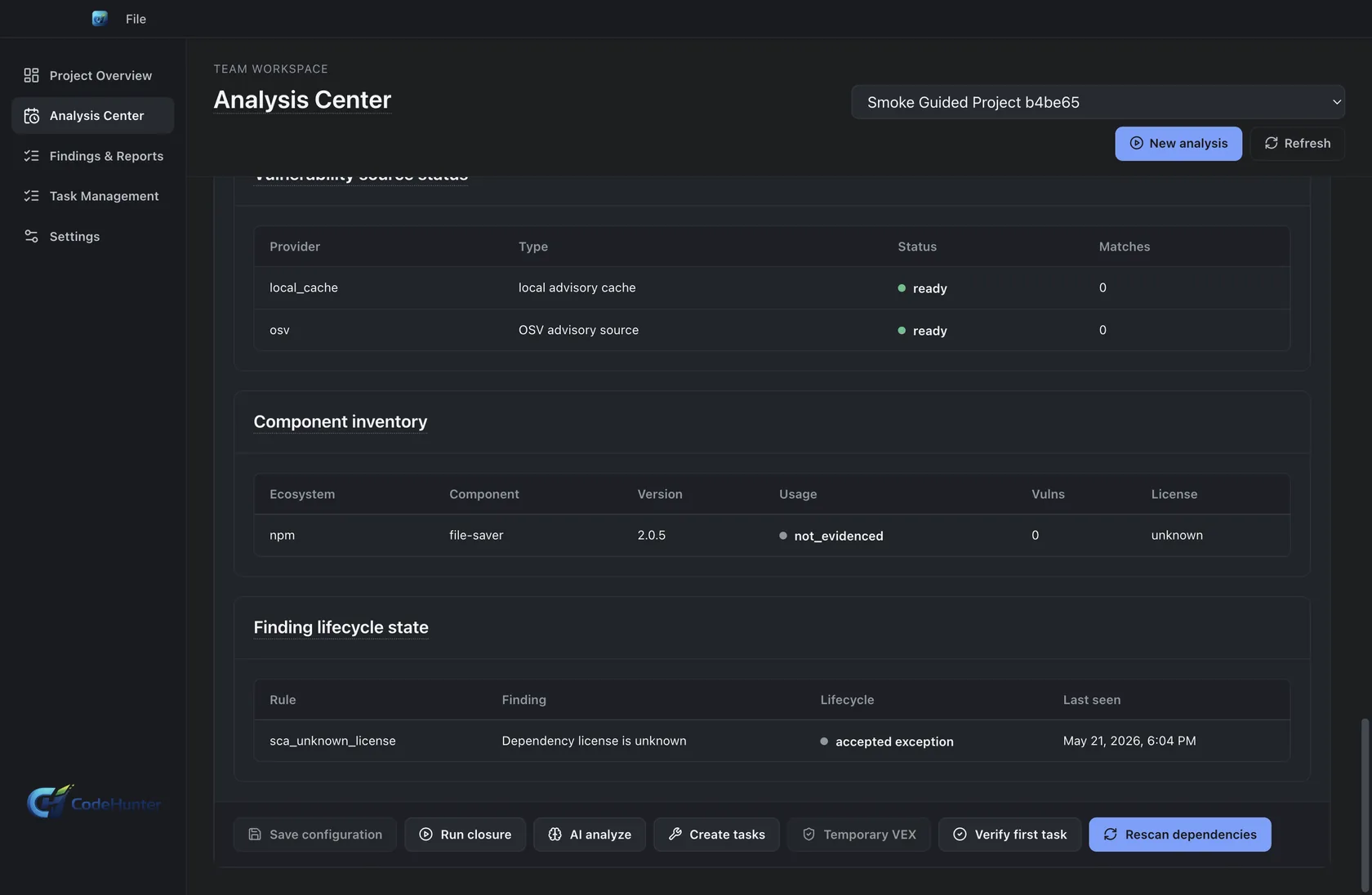
- Policy gates for severity, exploitability, exception, and verification state
- Auditable VEX exceptions and verified remediation closure
Dependency risk moves through policy, exception, remediation, and release evidence.
SCA closed loop
Team capabilities
Built for security accountability inside the product team.
Roles and ownership
Security reviewers, project owners, R&D leads, and remediation owners work from the same project state.
AI-assisted decisions
Findings are accepted, rejected, downgraded, assigned, or held with explicit evidence and rationale.
Remediation execution
Confirmed risk becomes scoped work with acceptance criteria, verification state, and closure evidence.
Release readiness
Baseline posture, unresolved risk, SCA policy, CI status, and accepted-risk records inform release decisions.
Team is the complete ASPM workspace for one product team.
Use Team when a single product line needs baseline governance, requirement and change analysis, owner remediation, SCA policy gates, CI evidence, and release decisions. Use Enterprise Portal when the organization needs to create and govern multiple Team workspaces from one portal.